





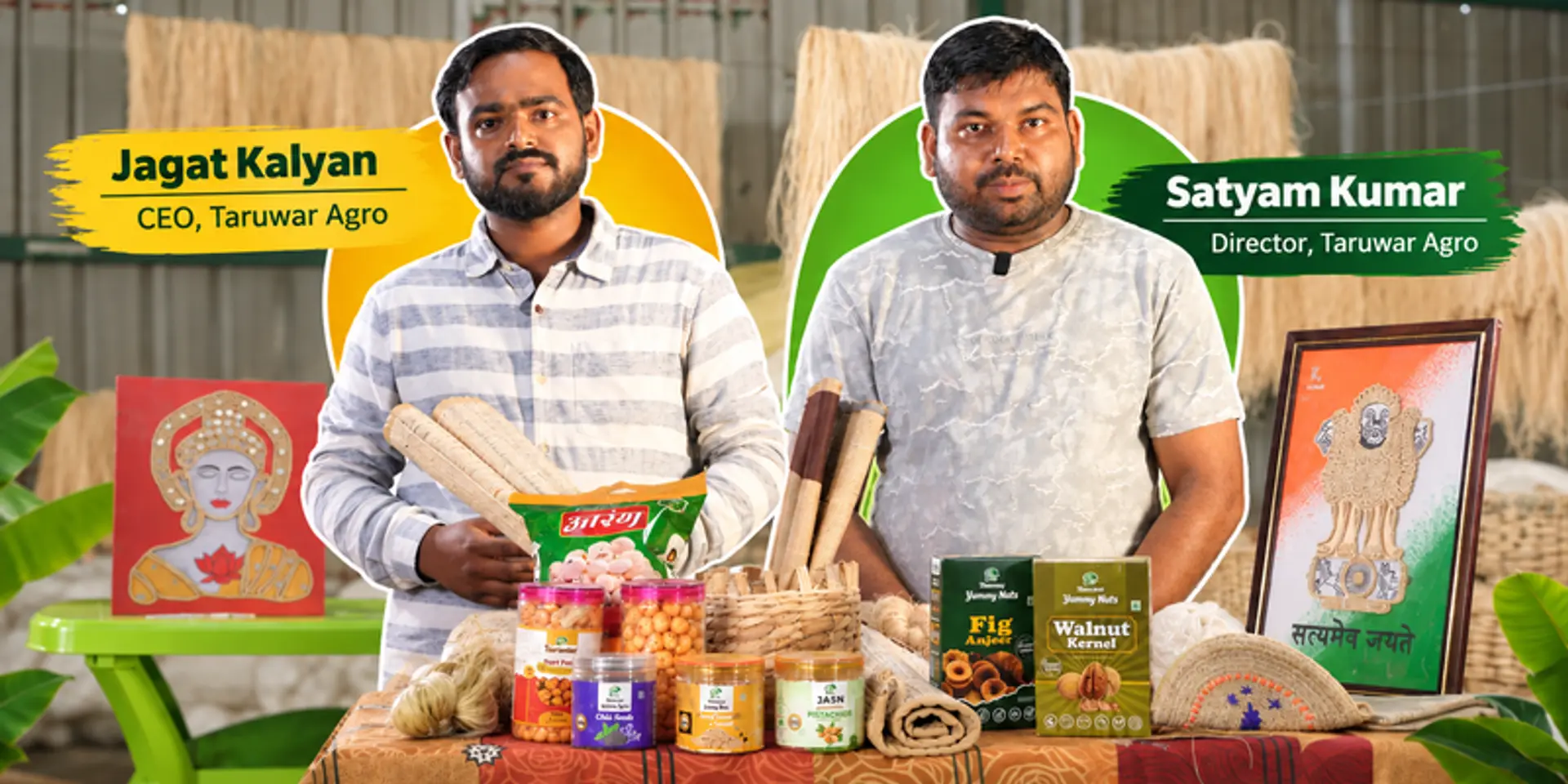
Founded by three friends, Taruwar Agro Industries transforms discarded banana stems into fibre, baskets, mats and other products. The venture connects agricultural waste with manufacturing while creating opportunities for farmers and local workers.
For Taruwar Agro Industries, a banana plant’s value continues long after its fruit has been harvested. The Bihar venture uses the remaining stems as raw material for products that can find a place in homes, offices and businesses.
Jagat Kalyan, Satyam Kumar and Nitish Kumar Verma met during their MBA studies and launched the venture in 2021. According to YourStory’s September 2026 profile, the founders wanted to build a business around Bihar’s locally available resources. Their search led them to banana fibre and operations in Hajipur.
The company’s approach extends beyond extracting fibre. Its website lists yarns, fabrics, fibre-extraction machinery and vermicompost among its offerings. By processing agricultural residue into materials and finished goods, Taruwar aims to develop several sources of value from the same resource. The company says local employment and collaboration with farming communities are central to its model.
Building the business required practical experimentation. The founders had to learn processing techniques, organise transport for bulky stems and train workers. YourStory reports that its products include baskets, file folders, yoga mats and prayer mats, with leftover pulp used for vermicompost. The publication also reported approximately ₹2.5 crore in company revenue for FY26.
Reaching customers is another part of the venture’s work. Taruwar operates an online storefront, and its marketing approach places emphasis on explaining the people and processes behind its products. This gives customers a way to understand how agricultural residue becomes something they can use.
For aspiring founders, Taruwar’s journey offers a practical starting point: examine the resources already available nearby, understand why they are underused, and identify a product customers will pay for.